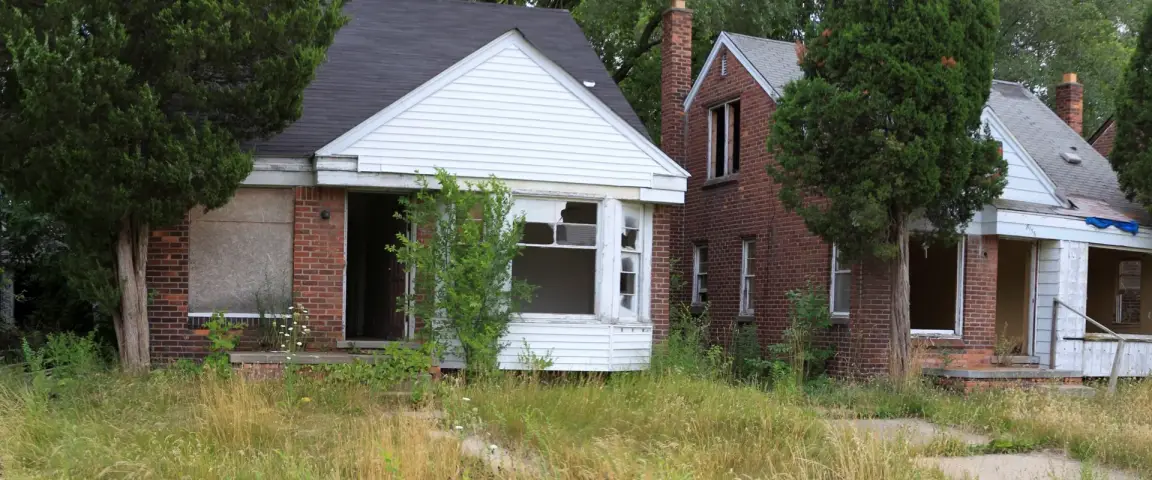

Nobody inherits a house and immediately thinks: this is going to be complicated.
You’re grieving. You’re dealing with funeral arrangements, family dynamics, legal paperwork, and the emotional weight of losing someone you loved. And somewhere in the middle of all of that, you find out you’ve inherited a property.
Maybe it’s the family home where you grew up. Maybe it’s a house you haven’t seen in years. Maybe it’s a property you didn’t even know existed until the estate attorney called. Whatever the circumstances, you’re now the owner — or partial owner — of a piece of Metro Atlanta real estate. And the question that eventually surfaces through everything else is: what do I actually do with this?
For a lot of heirs, the honest answer is: I can’t afford to keep it.
The mortgage payments are more than you can absorb. The property taxes are due and the estate doesn’t have funds to cover them. The home needs $40,000 in repairs you don’t have. You live in another state and can’t manage a property from a distance. Or there are three other heirs involved and nobody can agree on anything.
Whatever the specific reason, the feeling is the same — you’ve inherited an asset that feels more like a burden. And you need a real path forward, not platitudes about what a blessing it is to receive property.
This guide is written for you. We’re going to cover Georgia’s probate process, what your actual options are as an heir, the costs of holding a property you can’t afford, and how to sell an inherited Atlanta home quickly, cleanly, and for the best possible outcome given your situation.
First Things First: Understanding Georgia Probate
Before you can sell an inherited property in Georgia — before you can do almost anything with it legally — you need to understand probate and where the estate currently stands in that process.
What Is Probate?
Probate is the legal process by which a deceased person’s estate is administered, debts are paid, and assets are distributed to heirs. In Georgia, probate is handled through the Probate Court in the county where the deceased resided — so if your loved one lived in Fulton County, DeKalb County, Clayton County, or any other Metro Atlanta county, that’s where probate happens.
Probate is not optional in most cases. If a property was owned solely by the deceased and there is no joint tenancy or transfer-on-death deed in place, the property must pass through probate before an heir has legal authority to sell it.
How Long Does Probate Take in Georgia?
This is the question every heir wants answered immediately. The honest answer: it depends.
Simple probate with a valid will and cooperative heirs can move through Georgia’s courts in as little as six to eight weeks. Georgia offers a streamlined process called Year’s Support for surviving spouses and minor children, and a Petition to Discharge process that can be relatively fast for straightforward estates.
Complex probate situations — contested wills, multiple heirs who disagree, estates with significant debts, missing heirs, or unclear title — can drag on for months or even years.
The key variables that affect your timeline:
- Whether the deceased left a valid, properly executed will
- Whether all heirs are identified, located, and cooperative
- Whether the estate has debts that complicate asset distribution
- Whether the property’s title is clean or has complications
- The current caseload of the specific county probate court
A Georgia probate attorney can give you a realistic timeline estimate based on your specific situation. Most offer free or low-cost initial consultations and are worth contacting as early as possible — because in almost every case, getting the legal process moving faster is worth the cost.
What If There Is No Will?
When someone dies without a valid will in Georgia — called dying intestate — the state’s intestacy laws determine who inherits the property. Georgia’s intestacy laws follow a specific order of priority: surviving spouse, then children, then parents, then siblings, and so on.
In an intestate situation, the probate court appoints an administrator (rather than an executor named in a will) to manage the estate. This process typically takes longer than probate with a valid will, and disputes among potential heirs are more common.
If your loved one died without a will and left real property in Metro Atlanta, contact a probate attorney immediately. The sooner the legal process starts, the sooner you have options.
Joint Tenancy and Transfer-on-Death Deeds: When Probate Isn’t Required
Not every inherited property goes through probate. Two common ownership structures allow property to transfer directly to a surviving owner without court involvement:
Joint tenancy with right of survivorship — if the deceased owned the property jointly with another person (a spouse, for example) with right of survivorship language in the deed, the property transfers automatically to the surviving co-owner upon death. No probate required.
Transfer-on-death deed — Georgia recognizes transfer-on-death (TOD) deeds, which allow a property owner to designate a beneficiary who receives the property automatically upon the owner’s death without going through probate.
If either of these applies to your situation, your path to selling is significantly simpler. A title company or real estate attorney can confirm whether probate is required based on how the property was titled.
The Real Cost of Holding an Inherited Atlanta Home You Can’t Afford
This is where a lot of heirs make a costly mistake. They inherit a property, feel overwhelmed by the decision of what to do with it, and default to doing nothing — assuming that holding the property while they figure things out is a neutral decision.
It is not neutral. It is expensive. Here’s what you’re paying — or accumulating as debt — every month you hold an inherited Atlanta property you can’t afford:
Mortgage Payments
If the inherited property has an existing mortgage, those payments don’t stop when the borrower dies. The loan servicer will typically work with heirs during the estate process, and federal law (the Garn-St. Germain Act) generally prevents lenders from calling the loan due immediately upon the borrower’s death — but the payments still need to be made.
If the estate or heirs can’t afford to make mortgage payments during the probate process, the property can fall into default and foreclosure — which destroys equity that could have gone to the heirs.
Property Taxes
Fulton County, DeKalb County, Gwinnett County, Clayton County — every Metro Atlanta county expects its property tax bill to be paid regardless of whether the owner is deceased or the estate is in probate. Unpaid property taxes accumulate penalties and interest and eventually become liens that must be resolved before or at closing. In Georgia, significantly delinquent properties can be sold at a county tax sale — meaning heirs can lose the property and the equity if taxes aren’t addressed.
Insurance
A vacant inherited property needs to be insured — but standard homeowner’s insurance policies often don’t cover vacant properties. Heirs may need to obtain a vacant home or estate property insurance policy, which can run $100–$300 or more per month depending on the property’s value and location.
Utilities
If the property needs to remain heated, cooled, or have water running to prevent damage — particularly in Georgia’s hot summers and occasional cold winters — utilities add another monthly expense.
Maintenance and Lawn Care
An unmaintained property invites code enforcement violations, pest infestations, vandalism, and deteriorating condition. Lawn care alone in Metro Atlanta runs $100–$200 per month. Add in any emergency repairs that arise and maintenance costs can escalate quickly.
Code Violation Fines
If the inherited property has existing code violations — or develops them due to deferred maintenance during the estate process — fines from DeKalb County, Fulton County, the City of Atlanta, or other local code enforcement authorities can accrue daily. These become liens that reduce your net proceeds at closing.
The Cumulative Monthly Cost
Add it all together for a typical inherited Metro Atlanta property with a mortgage:
| Expense | Estimated Monthly Cost |
|---|---|
| Mortgage payment | $1,000 – $2,000+ |
| Property taxes (prorated) | $200 – $600 |
| Insurance (vacant property) | $150 – $300 |
| Utilities | $100 – $250 |
| Lawn care and maintenance | $150 – $300 |
| Total monthly carrying cost | $1,600 – $3,450+ |
Every month of delay costs real money. A six-month delay deciding what to do with an inherited property can cost $10,000–$20,000 or more in carrying costs alone — money that comes directly out of the equity that could have gone to the heirs.
Your Options as an Heir Who Can’t Afford to Keep the Property
Let’s be direct about what’s actually available to you. You have more options than it probably feels like right now.
Option 1: Sell the Property
For most heirs who can’t afford to maintain an inherited Atlanta home, selling is the right answer — and the sooner it happens, the better the financial outcome.
Once the estate has legal authority to sell (typically once an executor or administrator has been appointed by the probate court), the property can be listed and sold just like any other home. The sale proceeds go to the estate, outstanding debts and expenses are paid, and the remaining balance is distributed to the heirs according to the will or Georgia’s intestacy laws.
The key decisions in a sale are whether to sell traditionally on the MLS or pursue a fast as-is cash sale — and we’ll cover that in detail shortly.
Option 2: Refinance and Keep the Property
If one heir wants to keep the property and can qualify for financing, they can refinance the existing mortgage into their own name — essentially buying out the other heirs’ shares with a new loan. This requires qualifying for a mortgage independently, which means sufficient income, credit, and the ability to service the debt.
For heirs who genuinely want to keep a family home and have the financial capacity to do so, this is a viable path. For heirs who are reading this guide because they cannot afford to keep the property, this option is generally off the table.
Option 3: Rent the Property
If the property is in rentable condition, converting it to a rental and splitting the income among heirs is sometimes proposed as a solution. In practice, this is more complicated than it sounds — particularly when multiple heirs are involved.
Shared property ownership among multiple heirs requires ongoing agreement on maintenance decisions, expenses, tenant selection, rent pricing, and eventual disposition of the property. What starts as a cooperative arrangement frequently becomes contentious as circumstances and financial needs among the heirs diverge over time.
Renting an inherited property is a reasonable long-term strategy only when the property is in good condition, one heir is willing and able to manage it, and all heirs are genuinely aligned on the long-term plan. If any of those conditions aren’t met, the rental solution tends to create more problems than it solves.
Option 4: Partition Action (When Heirs Disagree)
When multiple heirs inherit a property and cannot agree on what to do with it, Georgia law provides a legal remedy: a partition action. Any co-owner can file a partition action in the county superior court, asking the court to either physically divide the property (rarely practical for residential real estate) or order the property sold and the proceeds divided among the co-owners.
A partition action is a last resort — it is slow, expensive, and adversarial. The legal fees and court costs eat into everyone’s proceeds. But it is an option when all other attempts at agreement have failed.
If you’re in a multi-heir situation with disagreements, the far better path is working with a neutral local real estate professional who can mediate the process and find a sale solution that all parties can live with — before the situation deteriorates to a partition action.
Selling an Inherited Atlanta Home: Traditional Listing vs. Fast Cash Sale
Once the estate has authority to sell, you face the most important practical decision of the process: how to sell.
The Traditional Listing Approach
A traditional MLS listing — hire an agent, prep the home, list it, host showings, wait for a financed buyer — is the right approach when:
- The property is in good, showable condition with minimal deferred maintenance
- You have the time and resources to wait 60–120 days for the right buyer
- There is one heir or multiple heirs who are fully aligned and cooperative
- The estate has funds to cover carrying costs during the listing period
- You want to maximize sale price and have the runway to pursue it
For a well-maintained inherited home in a desirable Metro Atlanta location with a clean title, a traditional listing can generate competitive offers and strong sale prices.
The Fast As-Is Cash Sale Approach
For the majority of inherited properties that heirs can’t afford to keep, a fast as-is cash sale is a significantly better fit. Here’s why:
No repairs required. Inherited homes — especially those that belonged to elderly owners who lived in the home for decades — frequently need significant updates and repairs. Buyers won’t care about original 1970s appliances, outdated bathrooms, or a 20-year-old roof. Cash buyers will. They purchase in any condition.
No carrying costs during a long listing period. A cash sale that closes in 14 days versus a traditional sale that takes 90 days is the difference between $3,000 and $20,000+ in carrying costs eating into your proceeds.
No financing contingencies. Traditional buyers’ deals fall through when their financing doesn’t come through. Cash buyers don’t have this problem. When a cash buyer makes an offer, it closes.
Simpler coordination among multiple heirs. A fast, clean transaction with a clear closing date is much easier to coordinate among multiple heirs than a prolonged traditional sale with showings, negotiations, inspection requests, and weeks of back-and-forth.
Works during the probate process. Experienced cash buyers and real estate investors who specialize in inherited properties understand probate timelines and can structure transactions to close as soon as the estate has legal authority to sell. They’re not going to walk away because the process takes a few extra weeks.
What Inherited Home Sellers Can Expect to Walk Away With
Let’s talk numbers, because this is ultimately what matters for heirs who need to make real financial decisions.
Your net proceeds from selling an inherited Atlanta home depend on:
- The home’s current market value (in its actual condition, not after hypothetical repairs)
- The outstanding mortgage balance (if any)
- The accumulated property taxes, penalties, and interest (if delinquent)
- Code violation fines and liens (if any)
- Probate attorney fees and estate administration costs
- Real estate agent commission or investor transaction fees
- Other estate debts that must be paid from proceeds
A local real estate professional can walk you through the specific math for your property. But the general principle is straightforward: your equity is the home’s sale price minus everything that gets paid at or before closing. The goal is to maximize that number by minimizing carrying costs (sell fast), minimizing repair investment (sell as-is when appropriate), and choosing the right buyer (cash buyer when speed and certainty matter).
The Inherited Home Checklist: What to Do in the First 30 Days
The first 30 days after inheriting a property you can’t afford to keep are the most important. Here’s your action plan.
Week 1 — Get the Legal Process Moving Contact a Georgia probate attorney and initiate the probate process if it hasn’t started already. Find out whether a will exists, who the named executor is (or who should petition to be administrator), and what the court timeline looks like. Do not wait on this step. Probate court doesn’t move faster because you’re ready — it moves faster because you filed earlier.
Week 1 — Secure the Property Make sure the property is locked, utilities are on (to prevent pipe damage and pest issues), and the lawn is being maintained. If the property is vacant, consider a vacant home insurance policy. A property left unsecured can deteriorate rapidly and attract vandalism, squatters, and code enforcement attention.
Week 2 — Understand the Financial Picture Pull together everything you can find: the mortgage statement (if there’s a loan on the property), property tax records (check the county tax commissioner’s website for any delinquency), any code violation notices, HOA statements, and utility bills. You need to know the full financial picture before you can make smart decisions.
Week 2 — Get a Property Assessment Contact a local Metro Atlanta real estate professional and get an honest, current assessment of the property’s market value in its current condition. This is free, it takes an hour, and it gives you the most important data point in the entire decision-making process: what is this property actually worth right now?
Week 3 — Communicate With Co-Heirs If multiple heirs are involved, get everyone on the same page as early as possible. Share what you know about the property’s condition, value, and carrying costs. Present the options clearly. The longer co-heir conversations are delayed, the more opportunity for misalignment to calcify into conflict.
Week 4 — Make a Decision and Start Executing Armed with legal counsel, a property valuation, and a clear financial picture, make a decision about the path forward and start executing. Whether that’s initiating a traditional listing, pursuing a cash offer, or beginning the conversation with co-heirs about a shared path — start moving. The carrying cost meter is running.
Special Situations: When Inherited Properties Are More Complicated
Out-of-State Heirs
Managing an inherited Metro Atlanta property from another state is one of the most common and challenging inherited home situations. Everything is harder from a distance — securing the property, managing maintenance, coordinating showings, attending closings.
For out-of-state heirs, a fast as-is cash sale with a remote closing option (Georgia allows remote closings with proper notarization) is almost always the most practical solution. You don’t have to fly back to Atlanta to close — work with a local agent who handles inherited properties and can manage the process on your behalf.
Properties With Significant Deferred Maintenance
Many inherited Atlanta homes — particularly those that belonged to elderly owners who lived there for 30, 40, or 50 years — carry significant deferred maintenance. Roofs, HVAC systems, plumbing, and electrical that haven’t been updated in decades. Cosmetic conditions that reflect a different era. In some cases, contents that have accumulated over a lifetime.
For these properties, a cash sale is almost always the right path. The math rarely supports investing in renovation before selling — the cost of repairs on a home you didn’t plan to own rarely comes back in the sale price.
Properties With Title Issues
Inherited properties in Georgia sometimes have title complications — liens from decades-old judgments, unpaid contractor claims, unclear chain of title from multiple inheritance events over generations, or property that passed informally without proper legal documentation.
These issues are not necessarily deal-killers, but they require a title attorney to resolve before the property can be sold with clear title. A local real estate professional with experience in inherited properties will flag these issues early and connect you with the right legal resources.
Hoarder and Severely Distressed Properties
Some inherited homes arrive with contents that reflect a lifetime of accumulation — or conditions that result from years of deferred maintenance and neglect. These properties can feel impossible to deal with.
They are not. Cash buyers purchase inherited homes in any condition, contents included. You don’t have to clean out the house, stage it, or make it presentable for showings. You can retrieve personal items of sentimental value and let the buyer handle everything else after closing.
Frequently Asked Questions: Inherited Homes in Atlanta
Q: Can I sell an inherited home before probate is complete in Georgia? In most cases, you need legal authority from the probate court before selling — meaning an executor or administrator must be appointed first. However, you can absolutely begin the process of finding a buyer, getting offers, and structuring a transaction that closes as soon as legal authority is established. Experienced cash buyers and investors who specialize in inherited properties do this regularly.
Q: Do I have to pay capital gains tax on an inherited home sale in Atlanta? Inherited property receives a stepped-up basis for federal tax purposes — meaning your cost basis is the property’s fair market value at the date of the original owner’s death, not what they originally paid for it. If you sell the property shortly after inheriting it, your capital gains tax liability is typically minimal or zero. Consult a CPA or tax attorney for guidance specific to your situation.
Q: What if the inherited home has more debt than it’s worth? If the property is underwater — meaning the mortgage and other liens exceed the home’s value — the estate may not be required to sell the property to pay the debt. In some cases, the lender takes the property back through foreclosure and the heirs simply don’t receive any proceeds. A probate attorney can advise on the estate’s obligations and the heirs’ exposure in this scenario.
Q: How do we divide the sale proceeds among multiple heirs? Proceeds are distributed according to the will or, if no will exists, Georgia’s intestacy laws. The distribution typically happens through the estate — the closing proceeds go to the estate account, debts and expenses are paid, and the remainder is distributed to heirs per their legal entitlement. A probate attorney manages this process.
Q: What if one heir is living in the inherited property and refuses to leave? This is a complicated situation that unfortunately occurs more often than people expect. A heir in possession of the property who refuses to vacate can significantly complicate and delay a sale. A probate attorney and potentially a partition action may be necessary to resolve the situation. This is one of the most important reasons to get legal counsel involved early.
Q: How do I find a buyer for an inherited home that needs major work? Work with a local Metro Atlanta real estate professional who has established relationships with cash buyers and investors who specifically seek out inherited and distressed properties. These buyers exist, they’re active in the market, and they can move quickly once the estate has authority to sell.
You Didn’t Ask for This. But You Can Handle It.
Inheriting a home you can’t afford to keep is overwhelming. You’re managing grief at the same time you’re managing logistics, legal processes, family dynamics, and financial pressure. Nobody prepares you for this.
But here’s what’s true: this situation is manageable. Thousands of Metro Atlanta heirs navigate it every year. The ones who come out the best are the ones who get informed quickly, get the legal process moving, and make decisive decisions rather than letting carrying costs and uncertainty drain the equity that should be going to them.
Your inherited property has value. That value belongs to you and your family — not to the county in unpaid taxes and fines, not to contractors in deferred repair costs, and not to months of carrying expenses that eat away at what you should be walking away with.
One conversation with a local Metro Atlanta real estate professional who understands inherited property sales can give you a clear picture of exactly where you stand and exactly what your best move is.
That conversation is free. Make it happen this week.
This article is for informational purposes only and does not constitute legal, financial, or tax advice. Georgia probate laws, tax regulations, and real estate market conditions are subject to change. Always consult a licensed Georgia probate attorney, CPA, and real estate professional for guidance specific to your situation.