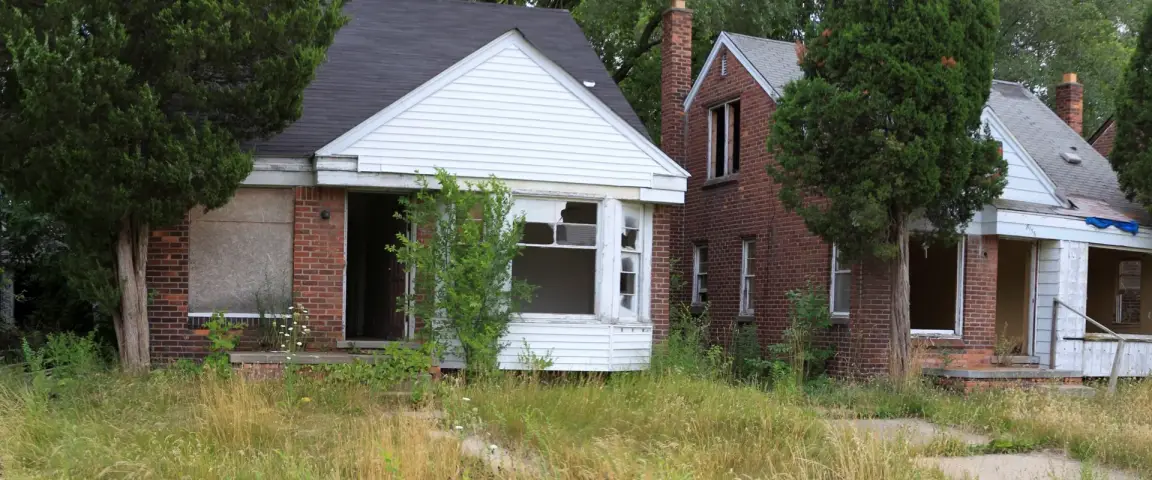

You got the notice. Maybe it came from Fulton County, DeKalb, Clayton, or Gwinnett. Maybe the city of Atlanta sent an inspector to your door. Maybe you’ve been aware of the problem for a while and just haven’t had the means — or the energy — to fix it.
However it happened, you’re now sitting with one or more home code violations, a deadline to resolve them, and a growing knot in your stomach about what comes next.
Here’s what you need to know: you are not stuck. Code violations don’t have to mean financial ruin, endless contractor headaches, or years of fighting with the city. For many Atlanta homeowners, a code violation is actually the wake-up call that leads to the best decision they ever made — selling the property quickly, as-is, and walking away with cash and their stress behind them.
This guide will walk you through everything. What code violations actually mean in Georgia. What happens if you ignore them. What it costs to fix them. And why, for a growing number of Metro Atlanta homeowners, selling the home is a faster, smarter, and more financially sound path than trying to repair their way out.
What Is a Home Code Violation in Georgia?
A home code violation occurs when a residential property fails to meet the standards set by local, state, or federal building and safety codes. These codes exist to ensure that homes are safe, structurally sound, and not creating hazards for occupants or the surrounding community.
In Metro Atlanta, code enforcement is handled at the county and municipal level. Fulton County, DeKalb County, Gwinnett County, Clayton County, Cobb County, and the City of Atlanta all have their own code enforcement departments — and they all have the authority to inspect properties, issue citations, levy fines, and pursue legal action against non-compliant homeowners.
Code violations are not the same as code violations on a home inspection report during a sale. These are official government citations with legal teeth — deadlines, financial penalties, and in some cases, the authority to condemn or demolish a structure.
The Most Common Home Code Violations in Metro Atlanta
Code violations come in all shapes and sizes. Some are cosmetic and relatively inexpensive to address. Others are structural, electrical, or environmental — and those can run into the tens of thousands of dollars to bring into compliance.
Here are the violations Atlanta area code enforcement officers cite most frequently:
Structural and Foundation Issues
Cracked or failing foundations, sagging floors, deteriorating load-bearing walls, and compromised roof structures are among the most serious — and most expensive — code violations a homeowner can face. These aren’t just cosmetic problems. They’re safety hazards, and local authorities treat them accordingly.
Foundation repairs in the Atlanta area can range from $5,000 for minor crack repair to $50,000 or more for full underpinning or pier installation. Many homeowners discover their foundation issues only when a code inspector shows up — by which point the damage has often been progressing for years.
Electrical System Violations
Outdated wiring (knob-and-tube or aluminum wiring), overloaded electrical panels, missing GFCI outlets in kitchens and bathrooms, exposed wiring, improperly installed fixtures, and unpermitted electrical work are among the most common violations in older Atlanta-area homes, particularly those built before 1980.
Electrical violations are taken seriously because of the fire and electrocution risk they present. Remediation can range from a few hundred dollars for minor fixes to $15,000–$25,000 or more for a complete panel upgrade and rewire.
Plumbing Violations
Unpermitted plumbing work, leaking or corroded pipes, improper sewage connections, non-functional fixtures, and code-deficient water heater installations all fall under plumbing violations. In older Atlanta homes, galvanized or lead pipes are still sometimes found — and their replacement is both expensive and mandatory.
Roof and Exterior Violations
Missing shingles, damaged flashing, failing gutters, deteriorating siding, broken windows, and structural damage to porches, decks, or steps can all generate code citations. Many of these violations are visible from the street and trigger complaints from neighbors or drive-by inspections by code enforcement officers.
HVAC and Mechanical Violations
Unpermitted HVAC installations, inadequate ventilation, missing or improperly installed carbon monoxide detectors, and non-functioning heating systems in rental or occupied properties can all result in citations. Georgia has specific requirements for mechanical systems, and work done without permits is a common source of violations.
Unpermitted Additions and Renovations
This is one of the most widespread code violation situations in Metro Atlanta — a previous owner (or the current owner) added a room, finished a basement, built a garage, or renovated a kitchen without pulling the required permits. When the property comes to the attention of code enforcement, all that unpermitted work becomes a liability.
Resolving unpermitted work can mean retroactive permitting (if the work meets current code), or tearing out and redoing the work entirely. Either path is expensive, time-consuming, and disruptive.
Overgrown Vegetation and Property Maintenance Violations
Overgrown lots, dead trees posing a fall hazard, excessive debris, abandoned vehicles, and general blight are all citable offenses in most Metro Atlanta jurisdictions. While these may seem minor, they can quickly escalate — especially if they attract pests, violate HOA rules, or draw ongoing complaints from neighbors.
Mold and Environmental Hazards
Visible mold growth, asbestos-containing materials (common in homes built before 1980), and lead-based paint violations are serious environmental code issues. Remediation is heavily regulated, requires licensed contractors, and can be extraordinarily expensive depending on the extent of contamination.
What Happens If You Ignore a Code Violation in Atlanta?
Let’s be clear about something: ignoring a code violation is never a strategy. It is a countdown timer.
Here is the typical escalation path when a Metro Atlanta homeowner fails to address a code citation:
Notice of Violation Issued The clock starts. You typically have 30 to 60 days to correct the violation, depending on the jurisdiction and the severity of the issue. The notice will specify exactly what needs to be corrected and by when.
Re-Inspection After the compliance deadline, an inspector returns. If the violation has not been corrected, the situation escalates.
Fines Begin Accruing Daily fines kick in. In the City of Atlanta, fines for code violations can reach $1,000 per day per violation. In Fulton County, DeKalb County, and surrounding jurisdictions, fines vary but can accumulate rapidly — sometimes reaching tens of thousands of dollars before homeowners even realize what’s happened.
Liens Are Placed on the Property Unpaid fines become liens against your property. This means the debt is attached to the title — and it must be resolved before you can sell or refinance the home.
Legal Action Persistent non-compliance can result in the jurisdiction taking you to court. In egregious cases, Georgia municipalities have the authority to condemn and demolish non-compliant structures — sometimes with the cost of demolition charged back to the property owner.
The Compounding Problem Here’s what makes code violations particularly dangerous: they compound. Fines build on fines. Maintenance deferred gets worse. A $3,000 roof repair ignored for two years becomes a $15,000 structural repair. A small plumbing violation becomes mold. Mold becomes a gut renovation. What was manageable becomes overwhelming — and what was a fixable situation becomes a financial crisis.
The Real Cost of Fixing Code Violations in Atlanta
Let’s talk numbers, because this is where many homeowners get their biggest surprise.
Fixing code violations isn’t just writing a check. It involves:
- Hiring licensed, permitted contractors — not handymen or unlicensed workers, which could make the situation worse
- Pulling permits for all corrective work, which takes time and money
- Passing re-inspections before the violation is officially cleared
- Potential discovery of additional issues once work begins — it’s extremely common for contractors to open a wall and find three more problems
Here is a realistic snapshot of what common Atlanta code violation remediation costs look like:
| Violation Type | Estimated Repair Cost |
|---|---|
| Foundation repair (moderate) | $8,000 – $30,000+ |
| Full electrical rewire | $12,000 – $25,000 |
| Panel upgrade | $2,500 – $5,000 |
| Roof replacement | $8,000 – $20,000 |
| Plumbing system repair/replacement | $3,000 – $15,000 |
| Mold remediation | $5,000 – $30,000+ |
| Unpermitted addition resolution | $5,000 – $50,000+ |
| HVAC replacement | $6,000 – $14,000 |
And that’s before you factor in the time — weeks or months of coordinating contractors, scheduling inspections, waiting on permits, and living with the disruption.
For many homeowners, especially those who are already stretched financially, the cost of compliance simply isn’t realistic. And for those who are older, dealing with health challenges, or going through a life transition like divorce or estate settlement, the burden isn’t just financial. It’s physical and emotional.
Can You Sell a Home With Code Violations in Atlanta?
Yes — and this surprises a lot of people.
You can legally sell a home with open code violations in Georgia. You are required to disclose known violations to potential buyers, but the presence of violations does not legally prevent a sale from occurring.
However — and this is important — there are practical limitations:
Traditional buyers using mortgage financing will struggle. Most conventional lenders (and FHA/VA lenders) will not approve financing on a home with significant, unresolved code violations. The appraiser will flag the issues, the underwriter will require them to be resolved before closing, and the deal will fall apart. This is why listing a code-violation property on the MLS through traditional channels is often a frustrating dead end.
Cash buyers and investors are a different story entirely. Investors and cash buyers purchase properties in any condition — code violations included. They aren’t relying on bank financing, so there are no appraisal requirements and no underwriter conditions. They buy the home as-is, handle the repairs themselves after closing, and move quickly.
This is why working with a real estate professional who has strong investor connections is so valuable for homeowners in your situation.
Why Selling As-Is Is Often the Smartest Move for Atlanta Homeowners with Code Violations
Let’s do some honest math.
Say your Atlanta home is worth $250,000 in fully repaired, code-compliant condition. You have $45,000 in violations and deferred maintenance to address. You owe $120,000 on the mortgage. You’ve already accrued $8,000 in fines.
Option A — Fix Everything and Sell Traditionally:
- Repair costs: $45,000
- Fines to clear liens: $8,000
- Agent commission (6%): $15,000
- Closing costs: ~$3,000
- Time to complete repairs and sell: 4–8 months
- Net proceeds: ~$59,000
Option B — Sell As-Is to a Cash Buyer:
- Cash offer (reflecting condition): $185,000–$200,000
- Agent or transaction fee: minimal or none
- Fines paid at closing from proceeds: $8,000
- Mortgage payoff: $120,000
- Time to close: 2–3 weeks
- Net proceeds: ~$57,000–$72,000
The numbers are often closer than homeowners expect — and when you factor in the time, stress, disruption, and risk of cost overruns in Option A, Option B becomes very compelling.
More importantly, Option B eliminates the risk. Renovation projects don’t always go smoothly. Costs overrun. Contractors don’t show up. Permits get delayed. Additional violations get discovered. With a cash sale, none of that is your problem.
Code Violations and Inherited Properties: A Particularly Common Challenge
One of the most frequent situations we see in Metro Atlanta involves inherited homes — properties passed down from a parent or grandparent who was unable to maintain the home in their later years.
These homes often sit vacant for months while the estate goes through probate. During that time, deferred maintenance accelerates, vegetation overgrows, and neighboring property owners or passersby report conditions to code enforcement.
By the time the heirs have legal authority to act, there may be multiple outstanding violations, accruing fines, and a property that needs significant work — often in a neighborhood and condition the heirs don’t have the bandwidth to manage.
For these families, an as-is cash sale is frequently the most compassionate and practical path. It resolves the estate, stops the fines, distributes proceeds to the heirs, and closes a difficult chapter — often within weeks of the decision being made.
Code Violations and Rental Properties: When Landlords Need Out
Atlanta’s rental market is active, but being a landlord in Georgia comes with real responsibilities — and real consequences for non-compliance.
If you own a rental property with outstanding code violations, you are exposed to:
- Tenant complaints and potential legal action
- Habitability lawsuits if tenants are harmed by code-deficient conditions
- Loss of rental income if the property is condemned or ordered vacated
- Personal liability in some circumstances
For landlords who have been managing aging rental properties in Metro Atlanta — especially those with older housing stock in communities like East Point, College Park, Riverdale, Decatur, or Stone Mountain — the combination of deferred maintenance, code violations, and tenant management can become genuinely overwhelming.
Selling the property, even at a discount to reflect its condition, can generate significant cash (especially if the property has been owned for years and the mortgage is paid down or off) while eliminating ongoing liability and headaches. Many experienced investors actually prefer tenant-occupied, code-violation properties — they know how to handle them and they close quickly.
What to Look for in a Real Estate Professional for a Code Violation Property Sale
Not every agent is equipped for this. Selling a home with code violations requires a specific kind of expertise and network. When you’re evaluating who to work with, look for:
Direct relationships with cash buyers and investors. This is non-negotiable. Your property needs a buyer who doesn’t need bank financing, and your agent needs to be able to produce one quickly.
Experience with distressed property sales. Ask specifically about their history with code violation properties, inherited homes, and as-is sales. Ask for examples. An experienced professional will have them.
Transparency about pricing. A good agent will give you an honest assessment of your home’s as-is value and what you can realistically expect to walk away with. Be wary of anyone who inflates the number to win your listing.
Knowledge of local code enforcement procedures. Your agent should understand how the county or city code enforcement process works, what liens mean for closing, and how to coordinate with title companies to resolve outstanding issues at or before closing.
Respect for your situation. Whatever brought you to this point — financial hardship, life transition, inherited burden — the right professional treats you with dignity and urgency, not judgment.
Atlanta-Area Counties and Code Enforcement: What You Need to Know
If you’re dealing with a code violation in Metro Atlanta, here’s a quick reference for the primary code enforcement contacts by county:
City of Atlanta / Fulton County The City of Atlanta’s Department of City Planning handles code enforcement within city limits. Fulton County Code Enforcement handles unincorporated areas. Fines in the City of Atlanta can reach $1,000/day per violation.
DeKalb County DeKalb County Code Enforcement is one of the more active departments in the region. The county has been aggressive in pursuing blight remediation, particularly in areas undergoing neighborhood revitalization.
Clayton County Clayton County Code Compliance handles violations in unincorporated areas, with individual municipalities (Jonesboro, Forest Park, Riverdale) handling their own enforcement within city limits.
Gwinnett County One of the fastest-growing counties in Georgia, Gwinnett has a robust code compliance division. Violations in Gwinnett are taken seriously, and fines accumulate quickly.
Cobb County Cobb County Community Development handles code enforcement for unincorporated areas. Cities within Cobb (Marietta, Smyrna, Kennesaw) operate their own enforcement divisions.
Henry and Douglas Counties Both counties have active code enforcement programs driven by rapid residential growth and community standards initiatives.
Understanding which jurisdiction you’re dealing with matters — because timelines, fine structures, and compliance requirements vary. A local real estate professional who works across these counties can help you navigate the specific requirements of your situation.
Frequently Asked Questions: Selling a Home With Code Violations in Atlanta
Q: Do I have to disclose code violations when selling my home in Georgia? Yes. Georgia law requires sellers to disclose known material defects, and outstanding code violations absolutely qualify. Failing to disclose can expose you to legal liability after the sale. Work with a licensed real estate professional and be transparent — it protects you.
Q: Will code violation liens automatically be paid off at closing? Generally yes, when a home is sold. Outstanding fines and liens are typically resolved through the closing process, with amounts paid from sale proceeds before you receive your net check. A title company will identify all outstanding liens during the title search.
Q: What if my fines are larger than my equity? This is a more complex situation, but it’s not hopeless. Depending on the jurisdiction, fines may be negotiable — especially if you’re proactively selling the property. Some municipalities will reduce outstanding fines when an owner demonstrates good faith by moving toward sale or compliance. A real estate attorney can help negotiate with the code enforcement authority.
Q: Can the city condemn my home if I don’t fix the violations? Yes. In severe cases — particularly when a property is deemed an imminent public safety hazard — Georgia municipalities have the authority to condemn and order demolition of non-compliant structures. This is the worst-case scenario, as it eliminates all of your equity and may still leave you with a bill for demolition costs.
Q: How quickly can I sell a home with code violations in Atlanta? With a cash buyer, closings can happen in 7–21 days. The title process (which includes the lien search and payoff coordination) is typically the longest part. An experienced team can move very quickly when motivated.
Q: What if I have multiple violations across several properties? Portfolio sales are common among landlords who are exiting the rental business. An experienced investor or real estate professional can structure a multi-property transaction that resolves all of your violations simultaneously.
Stop Letting Code Violations Control Your Life. Here’s What to Do Next.
Every day you hold a property with outstanding code violations is another day of fines accruing, conditions worsening, and options narrowing. The situation will not improve by waiting — but it can absolutely be resolved by acting.
You don’t need to fix everything before you sell. You don’t need to fight with contractors or code inspectors for months. You don’t need to let this define the next chapter of your life.
What you need is an honest conversation with a local Atlanta real estate professional who understands your situation, knows the code enforcement landscape across Metro Atlanta, and has the buyer relationships to get you to closing fast.
That conversation is free. And it might be the most valuable hour you spend this year.
Your property has value — even with violations. Let’s figure out what that looks like for you.
This article is for informational purposes only and does not constitute legal or financial advice. Estimated repair costs are approximate and may vary significantly based on property condition, contractor availability, and local requirements. Consult a licensed Georgia real estate professional, attorney, or code enforcement specialist for guidance specific to your situation.